Heuri: First Two Months
This article is a quick retrospective on what I’ve achieved with Heuri after two months. Because transparency is one of the key values of Heuri, I will share my early challenges and obstacles as well.
What went well
When I started Heuri, I had no idea what I was doing. After two months, I can say with confidence that… I still have more questions than answers! However, I take that as an intrinsic part of the process. Here is what I consider positive.
It is worthwhile
Heuri proved to be a project worth investing my resources into. Just this weekend, I was going through existing solutions in Czech EdTech and the options are very scarce, to put it mildly. There are indeed many projects around AI EdTech but all of them boil down to merchant math.
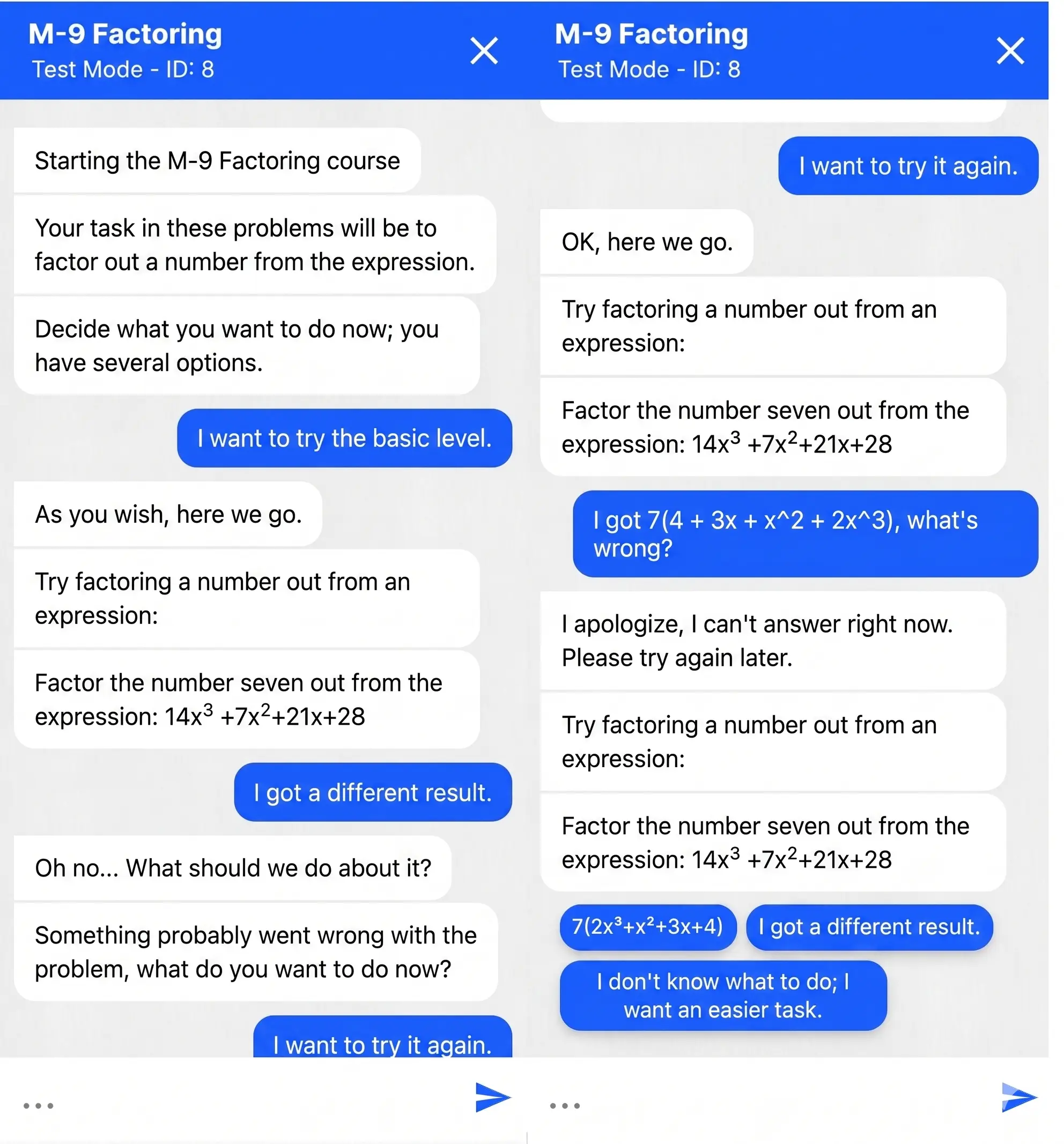 I struggle to name even one positive thing about “GenAI” apps like these. Source: author
It’s the same idea rehashed ad nauseam:
We’ve noticed the hype around AI.
Therefore, it’s reasonable to assume there will be a lot of money in such a market.
However, not many people actually know what machine learning is capable of and what it really does.
Nevermind, let’s do a GPT chatbot with a few additions sprinkled on top! ROI will be high because we can slap an AI sticker on it.
Kids will love this; we just need to find the right prompts and start every response with “Hey, buddy, that’s dope!” and we should be safe.
The only impressive project I found is Sciobot, which is designed as an AI assistant for teachers. I tried it out and was quite impressed with the results: after 10 minutes, I had a worksheet on a very specific topic of my choice: mathematisation of word problems leading to a system of linear equations.
The generated material wasn’t directly usable and became repetitive quickly, but that’s almost always the case with any GenAI product. However, there are many things that Sciobot does right and I think it is a solid use case for GenAI.
The fact that Sciobot is the only positive example unfortunately leads me to the following conclusion: the rest of the products I saw were more harmful than useful. You really don’t need a chatbot to know how to factor out 5a + 10. As I know from experience, the real challenge is accounting for all possibly correct answers. It feels to me that people have forgotten that a deterministic machine is sometimes still the most precise and cheapest tool available.
One of my initial worries was that I would be drowning in machine learning, thinking about where to even start, what problems to choose and in general, which plates to spin first. To be honest, sometimes I was and still am all over the place, but overall, developing Heuri for the first two months was one of the most interesting things I’ve done as a software engineer.
 I have to wear many more hats than I was used to as a professional software engineer. Image source: Wikipedia

It turns out machine learning is surprisingly easy to use and my experience from math tutoring was put to very good use, too, especially when dealing with opinionated, know-it-all clankers. No matter how this journey ends, I’ve already learned a great deal1 and quickly realized how important the human side of software engineering still is and most likely will be. Showcasing Minecraft clones or “the next thing that replaces UX designers and/or software engineers” is one thing; building a robust and comprehensive product around language models is a completely different league.
Don’t get me wrong, I’ve worked on many interesting projects throughout the 10+ years I’ve been programming, many of which were technically more challenging than Heuri. But working consistently on something of my own that can potentially grow into a business is a completely new experience to me. I’ve always loved building stuff that helps me and others and I think that’s what keeps me as motivated as I was half a year ago when I first started seriously thinking about something like this.
One of the most surprising aspects of the first two months of intensive work on Heuri is how little it costs to develop. The biggest expense that comes to mind is coding agent subscriptions, which I’d be paying for regardless. Other than that, hosting the app, running inferences, training models and doing related research still costs me on the order of cents per month. As soon as you throw away all the GenAI hype, ML is surprisingly cheap, collaborative and well-documented.
Let’s get real, though: developing and designing an app is only one part of the whole big story.
What needs improving
One of the things I need to focus on in the upcoming weeks is awareness of Heuri. I haven’t shared the app with anyone besides my closest circle, so I need to polish the first proof of concept as soon as possible and start showing it to a broader audience. In case you’re reading this and have a suggestion, I’ll be very glad to get in touch with you.
I’m not implying that Heuri needs to have a polished design right now; what’s more important is the philosophy I’m trying to put across. Even though I have tutoring experience, I don’t have a formal pedagogy degree, so there are likely many things that need work and improvement.
Even though the app is mainly intended to be an alternative source of information for individual students, I consider consulting with teachers about Heuri an invaluable source of feedback. Reaching out to teachers, schools and institutions that share my perspective on education is something that can only improve Heuri and perhaps move it towards use at schools, which is one of my biggest dreams.
I’ve set an internal deadline to roll out Heuri—whatever that ends up meaning—by September 2026. That leaves only four months. It’s not that by that time, Heuri will be a polished product; it’s just a deadline by which I’ve promised myself to decide whether it’s worth pursuing further. Time is very unforgiving, which might turn out to be a good thing.
I often find myself coming up with all sorts of improvements and content that I’d definitely like to test out in the near future, but I know very well it’s too early for grand-scale experimentation. Even though I don’t like time management tools, it’s probably about time to start using one.
Happy learning!