Adaptive Buddy for Math Students: Prologue
Programming is dead, long live programming!
I’ve been working as a software developer for quite some time now: 5+ years give or take, if you ignore the endless overtime on top of that. I’ve already learned and built a lot of different things. Nevertheless, quite recently, I started asking myself a question: What next? Even though I’m sure such a question would occur to me even without the GenAI overhype, this seismic shift in the way (not only) developers approach their work accelerated my decision for a change.
Let me be clear: The omnipresence of GenAI products surely has and will have its benefits, but for me personally, such omnipresence has also started to get annoying since I stopped building stuff at work, almost overnight. I realized I slowly became a proficient Claude Code prompter and got to know its annoying quirks. The job itself stopped making sense: becoming a GenAI product tester was not what I was in it initially for. The art of creation has always driven me forward: with GenAI vibecoding, things happen for me rather than by me.
Even if we assumed that Claude Code, one of the most prominent programming LLM models1, would code everything impeccably—a proof of which I’m still patiently waiting for—I wouldn’t be thrilled by any of its creations, just as I’m not thrilled and excited about Picasso paintings the same way I would be about my own creations. I don’t want to deteriorate and transform myself solely into an expert search engine user, however smart the search engine might be. I’d be better off… keeping bees, perhaps?
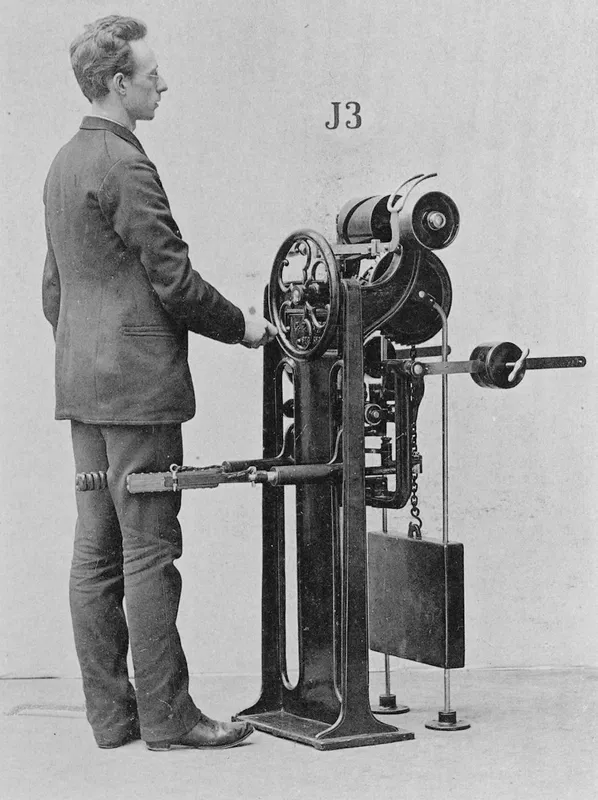 A regular day of a state-of-art computer
 operator programmer in 2026. Public Domain Image Archive.
Aside from my programming job, I’ve also been tutoring high schoolers in mathematics. To be honest, even though this has been a side hobby for me (4 years and counting), I’m gradually getting much more satisfaction through teaching than programming.
Believe it or not, solving equations isn’t what thrills me the most: the number one reason students come to me is that they are demotivated and feel lost. It’s not that they don’t know how to use Google, YouTube, ChatGPT and Photomath; it’s more that they are just so disconnected from the subject that it’s daunting to even start.2
What’s that for, anyway? 🤔 Solving equations won’t help me in day-to-day life. Why can’t you teach us how to fill out tax forms instead? Show us PRACTICAL skills, dammit! 😡 😤
From my nontrivial amount of tutoring experience, Czech high school students are at best indifferent to math or, in the vast majority of cases, they think that a) “they’re not good at math” or b) “math is stupid and pointless”, which unfortunately very often sticks with them in their adult life.
When I’m a lawyer/medical practitioner/self-made businessperson, I won’t be juggling systems of linear equations. I’d rather learn how to communicate with my partner and be empathetic but let’s get through this, then… 😩 😭
However, I recently realized they are completely right on both fronts: a) they do suck at math and b) math is indeed stupid and pointless. The distinction we have to start making, though, is that math taught at schools has almost nothing to do with how mathematics is created and used in real life. That doesn’t have to be the case, as I firmly believe kids are immensely perceptive, curious and bright, most of the time. Let me tell you a bit about myself so you know what I mean.
Finding passion in learning in spite of formal education
When I was growing up, I always adored mathematics almost above anything else: in a way, it was the perfect virtual world in which I could think about fascinating things, impossible in real life. Some kids had Minecraft, I had math. All of that was happening outside of and in spite of attending school rather than because of school. There is no point in denying I had a great deal of luck with math teachers. However, I believe this was a coincidence rather than a systemic consequence.
That’s because my love for mathematics didn’t develop when I solved mind-numbing and predictable exercises during classes, like a trained parrot would: it mostly formed when I was creatively struggling with math olympiad problems, participating in various school competitions or attending other math-related events. Yes, let’s get this immediately out of the way: I was a typical, certified and world-class nerd. I still am, in fact: my passion for mathematics hasn’t died in me and survived to this day, one of the most precious things I have.
 It’s easy to become a mathematics cynic, especially when the only “mathematics” you see is at school. Public Domain Image Archive
Merchant math
The same cannot be said about countless millions of students who equate mathematics with memorizing formulas and solving contrived problems from “real life”3: no, you really don’t usually need to figure out how long it will take 10 machines to do a job if 5 machines do it in 2 hours, nor will it improve your problem-solving skills. I like to refer to such mathematics as merchant math: as Paul Lockhart brilliantly points out4, Beethoven didn’t master his craft to compose commercial jingles even though he would be perfectly capable of it; rather, he approached music with passion as an art, which likely motivated him to learn the necessary skills of the trade: musical notation, piano mastery, composition techniques, etc.
Similarly, we should not guide kids in solving X because of any combination of the following contrived and often pretentious reasons:
- X is common knowledge, every orderly citizen and educated person knows that.
- X is what makes your credit cards work and makes the Internet a secure place. Just be grateful for what your ancestors gave you!
- Why on Earth would YOU like to pick what and how to learn at school? Just get the hang of this in this particular way, ideally by doing exactly the same instance of X 100 times in a row. But remember: THIS is what makes your brain sharper and pushes your critical thinking to the next level.
An attentive reader has surely noticed that such reasons are still commonly used by educators even outside of mathematics, perhaps just slightly varied to sound more appealing and sexier. To give you an example of this, foreign language education is, in my opinion, also systematically atrocious. In the case of languages, though, direct practicality of speaking the language outshines such deficiencies. Unfortunately, the innate masking of such a failure “by practicality” is inherently detrimental to the quality of education, especially if the only success criterion is that “a person must know / have competence X”. When was the last time you saw a toddler learning the grammar rules of past perfect continuous in their mother tongue?
Words fail to describe how painful it is for me to hear almost anyone say: “I’ve always been bad at math”. What people usually mean is that they are bad at merchant math, which is not and should not be a surprise. Be honest with yourself: if you were interested in learning, say, knitting scarves, would any of the arguments above be a compelling reason for you to start and, most importantly, persevere with knitting? Following the same logic, merchant math is what computers do, not something which should be the goal of any human mathematics student. Kids should explore and create their own mathematics5, not train their “analytical and critical thinking”, terms that feel without weight and meaning due to their overuse and misuse.
What next, then?
To be fair, I think education in Czechia is miles ahead if we were to compare it with education 20-30 years ago.6 The problem isn’t the teachers—most educators are heavily overburdened and trapped within a system that has an excruciatingly long feedback loop.7 We can’t wait decades for the system to catch up, and we can’t expect exhausted teachers to fix it overnight. That’s why I have decided to build a tool that shows Czech high schoolers there are better, more creative ways to learn math. In the upcoming weeks, through the development of Heuri, I’ll show you—and myself—how we can make that happen.
References
-
Jimenez, C. E., et al. (2024). “SWE-bench: Can Language Models Resolve Real-World GitHub Issues?” The Twelfth International Conference on Learning Representations (ICLR). ↩︎
-
Boaler, J. (2015). Mathematical Mindsets: Unleashing Students’ Potential through Creative Math, Inspiring Messages and Innovative Teaching. Jossey-Bass. ↩︎
-
Wolfram, C. (2020). The Math(s) Fix: An Education Blueprint for the AI Age. Wolfram Media. ↩︎
-
Papert, S. (1980). Mindstorms: Children, Computers, and Powerful Ideas. Basic Books. ↩︎
-
Ministry of Education, Youth and Sports (MŠMT). Strategy for the Education Policy of the Czech Republic up to 2030+. This document outlines the ongoing transition from rote learning to competency-based frameworks. This is a very common misinformation I see spread online like a disease: it’s not that MŠMT hasn’t created a more flexible framework (even though there are still hard boundaries), it’s just that such big changes take a lot of time to be realized. ↩︎
-
For more information, consult a detailed OECD analysis available online. ↩︎