Heuri: Self-Defence
To me, many GenAI educational products seem only to amplify the merchant mentality. Apart from reducing math to mere equation solving, GenAI in EdTech heavily borrows from outside the industry, parroting the need for a frictionless experience: requiring zero effort, allowing no mistakes, and guaranteeing an absolute absence of struggle, a vice I have repeatedly criticized in my previous articles. Just a few examples:
Don’t stress—not everyone gets math on their first try. Our step-by-step explanations help you break down problems so you can learn as you go.
Photomath, 11.5.2026
91% of Chegg customers say they get better grades when they use Chegg to understand their coursework.* *Survey respondents were entered into a drawing to win 1 of 10 $300 e-gift cards.
Chegg, 11.5.2026
With an intuitive interface, it simplifies complex equations and provides step-by-step solutions. This unique blend of technology and human touch makes Math problem-solving a breeze, boosting your confidence and understanding. Directly below this section, the first exercise, ostensibly supporting this claim, is given exactly in this format: MTH101 * 27 If x and y are real, express 2-3i4+2i in the form of x+yi A:-14-8i B:14+8i C -14+8i D:14-8i
Gauth, 11.5.2026
Choose the exercise you need to solve tomorrow, choose a pastime while we do everything for you, choose your ChatGPT wrapper. Choose life. Is that what really prepares young people for their adult lives?
 Just putting lofty slogans like ‘We’re here to help students understand’ on a webpage does not imply actually doing it. Image source: Picryl
From my experience, one of the biggest problems teenagers face when learning math is a reluctance to defend their own reasoning. During my tutoring practice, I’ve lost count of how many times this scenario has unfolded:
- A student has just solved a problem I assigned to them. The result is technically correct. We could perfectly move on and solve something else.
- However, I proceed to ask: Fair enough. Is that the solution we’re looking for?
- Almost always, I hear a very hesitant yes or I don’t know.
It’s worth noting here that the issue is rarely just about the student. It’s more that they are seldom taught how to defend their stance. That might be one of the reasons people sometimes resort to resignation: What’s math good for anyway? What do I need it for? I’ve been in those shoes, albeit outside of math.
A Quick Intermezzo
When I was a teenager, I longed for an acoustic guitar. My parents got me one. My hands felt sore, and strumming almost any chord felt incredibly difficult, even after a few weeks of practice. Back then, I thought I just wasn’t “the chosen one,” that I was “holding it wrong,” and that playing the guitar in general was not for me.
Later on, I decided to buy my first guitar with my own money to try my luck again. Only then did I realize what the issue with the original guitar was: it was a classical guitar that the seller had fitted with metal strings meant for an acoustic. For those not in the musical know, it’s the equivalent of attaching skis to a car: it becomes a useless tool.
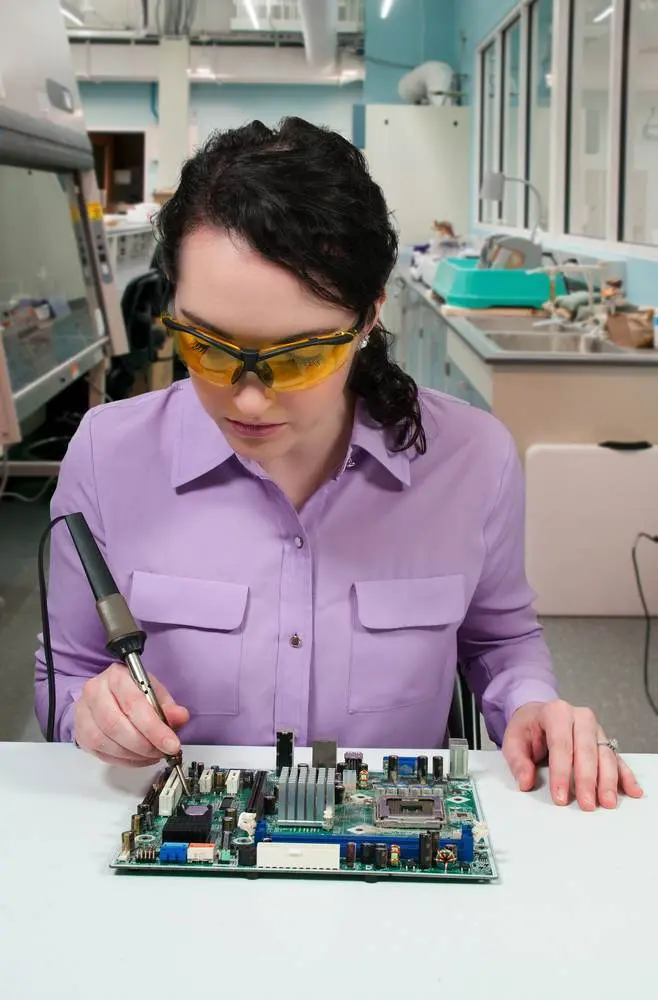 Perhaps you’re just holding math wrong. Image source: eejournal
Approaching problem-solving through the lens of simplifying complex equations and providing step-by-step solutions with an awesome tool X is bound to be useless. It only amplifies the insecurities a student might have about themselves, reinforcing the idea that there is nothing wrong with delegating their thinking to a language model because “they’re too dumb” anyway.
Given this climate, it’s even more difficult to develop an EdTech platform that avoids these pitfalls, as I am essentially starting on a green field. I prefer to view it optimistically as a challenge, so I started searching around.
Math Head
Marcelo Labre’s insightful paper on domain ontology integration with LLM capabilities turned out to be my starting point. It quickly made me realize a few things:
- Machine-readable math knowledge bases have been in use since the 1990s.
- All this knowledge is most likely written in English and with “English math in mind” 1.
- Open datasets with quality math problems exist in abundance.
Based on this work, I created a symbolic mathematics library in Python that will bring determinism to Heuri. I named it symave, as it’s a SYmbolic MAthematics VErifier, which is exactly what it does.
Let’s suppose a student is asked to derive the area formula for an arbitrary triangle. They are asked to provide an explanation in natural language, which might go something like this:
I can compute the triangle area by multiplying a side with its height and divide this by two.
If a human reads this sentence, the answer is clear: the student has arrived at the correct formula. If a machine reads this, however, things get trickier because the student might choose slightly different wording that a teacher would still consider correct. Passing the input solely to an arbitrary LLM might prove unwise because:
- General language models aren’t well suited for precise mathematical thinking and nuance.
- Language models were designed for pattern recognition, not verification.
Pattern recognition is exactly what Heuri will use an LLM for. This is what the definition, visible to the LLM, will look like:
| Attribute | Value |
|---|---|
| id | plangeo3:area_of_triangle |
| cd | plangeo3 |
| name | area_of_triangle |
| source | openmath |
| role | application |
| description | The area of a triangle given one or more (side, altitude) pairs. |
| type_signature | List[(R, R)] -> R |
| properties | |
| examples | Area of triangle with base 6 and height 4: area_of_triangle([(6, 4)]) = 12 |
| keywords | triangle, area, side, altitude, height, planar |
Note that behind this definition, there is explicit code that is run. Using the student’s input, the LLM constructs an expression similar to $\frac{a_i h_{a_i}}{2}$; we then evaluate it using the symbolic math engine and compare the result to area_of_triangle, the expected outcome.
You could object that this is still based on “vibes,” since we are relying on the model for the heavy lifting between I can compute the triangle area by ... and $\frac{a_i h_{a_i}}{2}$. I would agree with you: it is indeed a leap of faith, albeit a much smaller one than “let’s give it to an LLM and hope for the best that statistical gods are on our side.”
At the same time, however, we gain a brilliant opportunity to explain what happened, irrespective of the result, showing complete transparency. If the LLM outputs $a_i h_{a_i}$, for example, because divide this by two gets lost in translation, we return a message to the user saying:
$a_i h_{a_i}$ doesn’t seem quite right, as that describes the area of a rectangle.
This gives them an opportunity to elaborate further, pulling them back into the interaction.
Enough of Tables and LaTeX: What’s the Endgame?
While I am heavily focused on building a working prototype of this system, it is equally important to present what it is trying to achieve to reveal the bigger picture:
- Proposition formulation. A student using Heuri should quickly get used to formulating little lemmas and propositions they’ve noticed while interacting with any of the bites. It doesn’t matter how imprecise they are at the beginning; simply putting the idea into words is incredibly important.
- Proposition refinement. If the proposition isn’t quite there yet, e.g., The triangle area is half the product of two triangle sides, Heuri will provide a counterexample or a Socratic question that makes them readjust their statement.
- Proposition critique. A very useful skill to possess is the capability to understand the “math of others.” An example might be:
It seems that for a right triangle, multiplying both of its legs and halving this product gives us its area: can the same be said about any triangle, i.e., that its area is half the product of two of its sides?This creates a tension that begs for resolution and leads to deeper understanding. - Scaffolding. It’s naive to think a student will always know how and what to argue for any given topic, that’s why they are a student in the first place. This is why I am developing the concept of a pedagogical memo that incorporates gradually revealing hints to help the student with their understanding. (I will likely elaborate on memos in upcoming articles, so stay tuned.)
To be completely honest, this switch to determinism gave me high hopes; until now, I had doubts about whether Heuri would just become another StudyFi, Chegg, Photomath, Gauth, or infinitely many others. This conceptual shift to “semi-determinism” or “selective nondeterminism” is what will distinguish it, making it trustworthy and credible not only to students but potentially to educational institutions as well.
Happy learning!
-
Even though math is the same all around the world, notation sometimes differs from country to country, occasionally in the most confusing manner. ↩︎